The question is whether it is becoming what it says it values.
About Transformation is an advisory practice founded by Jide Ashimi, Transformation Advisor. We create the conditions for meaningful and sustainable transformation, with Anti-Racism, Racial Equity and Social Justice at the centre of the work rather than its margins.
More than two decades across mental health, public services, staff engagement, coaching, facilitation and organisational change.
Currently seconded inside a major NHS mental health trust to design and deliver its Anti-Racism programme.
Working with the NHS, health and care systems and the wider public sector, and with charities, social enterprises, higher education, arts and cultural organisations and professional bodies.
Why Change So Often Does Not Hold
The Commitment Was Real. The Conditions Were Never Cultivated.
Every organisation is engaged in change. Strategies evolve, structures are redesigned and priorities shift. Yet meaningful transformation often remains elusive.
The familiar pattern
Leadership programmes develop capable individuals while the relationships between them remain largely untouched.
Policies express important aspirations while the everyday experience of staff changes very little.
Initiatives build momentum before familiar patterns quietly reassert themselves.
A different question
These difficulties are rarely caused by an absence of commitment, intelligence or technical solutions. More often, the conditions those solutions need in order to take root have never been intentionally cultivated. Culture is not what an organisation declares. It is created through what it repeatedly notices, rewards, tolerates and avoids. This is why the work begins with a different question.
What conditions need to exist if this organisation is to realise the future it hopes to create?
Where Transformation Happens
Organisations Change in Five Places at Once.
These five domains form the working architecture of the practice. Sustainable transformation depends on the interaction between them, not on any one alone.
Self
Awareness, identity, beliefs, emotion and reflexivity. How people understand themselves and their own participation in what is happening.
Relationships
Trust, dialogue, conflict, belonging and difference. What passes between people, and what those dynamics make possible or quietly foreclose.
Leadership
Purpose, courage, accountability and the use of power. How authority is held and how decisions are actually made.
Culture
Norms, stories, rituals and expectations. What is rewarded, tolerated, repeated and left unspoken, whatever the policy says.
Systems
Structure, policy, governance, resource and data. The arrangements that distribute voice, opportunity and consequence.
Work focused only on behaviour can leave inequitable systems intact. Work focused only on structure can ignore the people through whom systems are lived.
At the Centre of the Work
Anti-Racism Is Not a Specialist Strand. It Is How Excellence Is Understood.
Organisations cannot credibly speak about excellence, leadership, culture, wellbeing or transformation while leaving racism and racial inequity at the margins. Racism shapes whose knowledge is valued, who is believed, who progresses, who carries emotional labour and who feels safe to speak. It affects staff experience, leadership culture, service design, access, outcomes and trust.
Anti-Racism
A practice, not a statement of belief. The ongoing responsibility to recognise, challenge and change what reproduces racial inequity.
Racial Equity
Not achieved by treating everyone the same within unequal conditions. It requires addressing the barriers that sustain unequal outcomes.
Social Justice
The wider ethical horizon. It asks organisations to examine their purpose, their power and the consequences of their choices.
The work is explicit about race, identity, power and inequity. It does not conceal Anti-Racism within generic inclusion language, and it does not reduce people to fixed categories. Participants are respected as people capable of learning, while leaders and institutions remain responsible for the consequences of their choices.
Challenge is held with compassion. Compassion does not become avoidance.
How We Are Different
We Do Not Arrive With the Answers. We Arrive With the Questions Nobody Has Asked Your Staff.
Different people hold different forms of knowledge. Leaders understand formal responsibilities and strategic constraints. Staff understand the realities of organisational life. Lived experience partners understand the consequences of systems in ways professional distance cannot reach. Communities hold knowledge about history, trust and context. The work begins by bringing these into relationship.
The Usual Approach
How We Work
The Usual ApproachA programme brought in from outside.
How We WorkWork shaped by the knowledge your leaders, staff, lived experience partners and communities already hold.
The Usual ApproachChange implemented upon people.
How We WorkChange cultivated with people, through co-design, co-production and co-learning.
The Usual ApproachSuccess measured by attendance and completion.
How We WorkSuccess measured by what becomes more possible afterwards.
The Usual ApproachMomentum that fades when the sessions end.
How We WorkInsight, relationships and capability that continue after the engagement has ended.
The Usual ApproachDependency on an external consultant.
How We WorkAn organisation more capable than when the work began.
Partnership is not the symbolic presence of diverse voices around a table. It depends on who shapes the questions, whose knowledge influences decisions, how power is distributed, and whether participation changes what the organisation ultimately does.
In eighteen months somebody will ask you what changed. This is the approach that gives you an answer your own staff would recognise.
Areas of Practice
An Integrated Practice, Not a Catalogue of Services.
Engagements are shaped around each organisation's purpose, context and readiness, drawing from four principal areas.
Strategic partnership for organisations navigating complex culture change. Organisational inquiry, culture diagnosis, executive and board advice, stakeholder listening, facilitated sense making, governance and developmental evaluation.
What becomes possible: clarity about what is shaping your culture, and closer alignment between values, leadership and lived experience.
Moving from commitment and awareness towards credible Anti-Racism practice and measurable Racial Equity. Strategy and action planning, policy review, workforce and leadership analysis, leadership accountability, and integration into governance, supervision and decision making.
What becomes possible: a strategy your board can be held to and your staff recognise as real.
Developmental work for boards, executives and senior teams leading through complexity. Facilitated executive dialogue, coaching, Racial Equity leadership, psychological safety, courageous conversations and ethical decision making.
What becomes possible: leaders who can stay present in a difficult conversation and translate listening into visible action.
Structured spaces that help people make meaning of difficult experience, recognise patterns and restore relationship. Reflective practice groups, mediation, psychologically informed debriefing, and dialogue around race, identity, power and privilege.
What becomes possible: teams that recover from conflict or harm rather than quietly absorbing it.
The work can be delivered through consultancy, facilitated programmes, coaching, culture diagnostics, policy and programme review, developmental evaluation, keynote speaking and thought leadership engagements. The form follows the work. It is never allowed to determine it.
The Conditions Method
See. Understand. Align. Act. Learn and Become.
Every engagement moves through five interconnected forms of work, held through a developmental pathway of Discover, Clarify, Cultivate, Embed and Evolve. They are not rigid stages. Transformation often means returning to what has been seen and adjusting as new realities emerge.
The work is not only to design the future. It is to become capable of creating it.
Surfacing lived experience, evidence, patterns and assumptions, and what may be operating beneath the familiar account of the problem.
Making meaning of the psychological, relational, historical, cultural and systemic dynamics shaping the present.
Clarifying purpose, values, the conditions the organisation wants to create, its equity commitments and who holds responsibility for them.
Translating insight into leadership practice, relationships, decisions, structures, policy, resource and measurable commitments.
Reflecting on impact, remaining accountable to experience and outcomes, and embedding new ways of working the organisation can sustain for itself.
In practice
In practice, an engagement might help an executive team understand why a well-intentioned Anti-Racism strategy is not changing staff experience, support leaders to examine how their own behaviour shapes culture, facilitate dialogue where trust has broken down, redesign an action plan so that accountability is explicit, or coach a leader from avoidance towards courageous, values-aligned action.
What People Say
Across every setting, the recurring evidence is not only the content Jide brings but also the quality of the space he creates.
“
Jide brings a distinctive blend of unapologetic activism and appreciation for what it takes to make change happen in organizations. He doesn't compromise on either the ideas or bringing people along on the journey of those ideas.
Client reflection
“
Jide brings a rare combination of courage, authenticity, compassion, and empathy to his leadership, enabling him to challenge systems and inspire people with equal effectiveness.
Simone Garrison, Equality, Diversity and Inclusion Lead
“
Jide's insistence on anti-racism being about action as much as about reflection was an important watershed moment for me.
Client reflection
“
Working with you has shown me what can be achieved through patience, kindness, and good humor while retaining a strong core of opposition to all forms of stigma, prejudice, and discrimination.
Eleanor
“
Jide's expert and compassionate approach was an invaluable addition to our reflective spaces.
Rachel Lewis
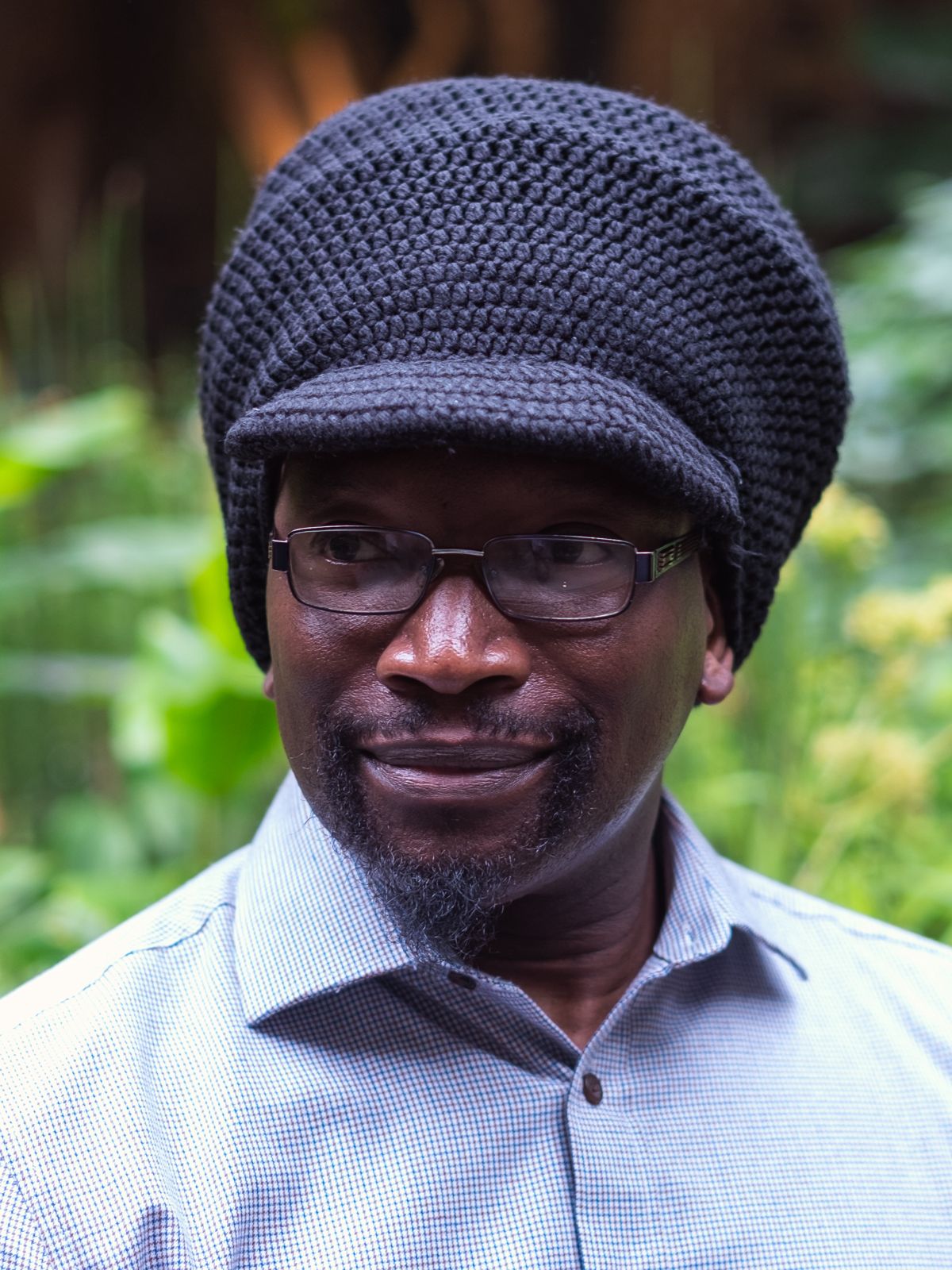
Jide AshimiFounder & Transformation Advisor
The Practitioner
He Did Not Learn This From a Framework. He Learned It Inside the System You Are Trying to Change.
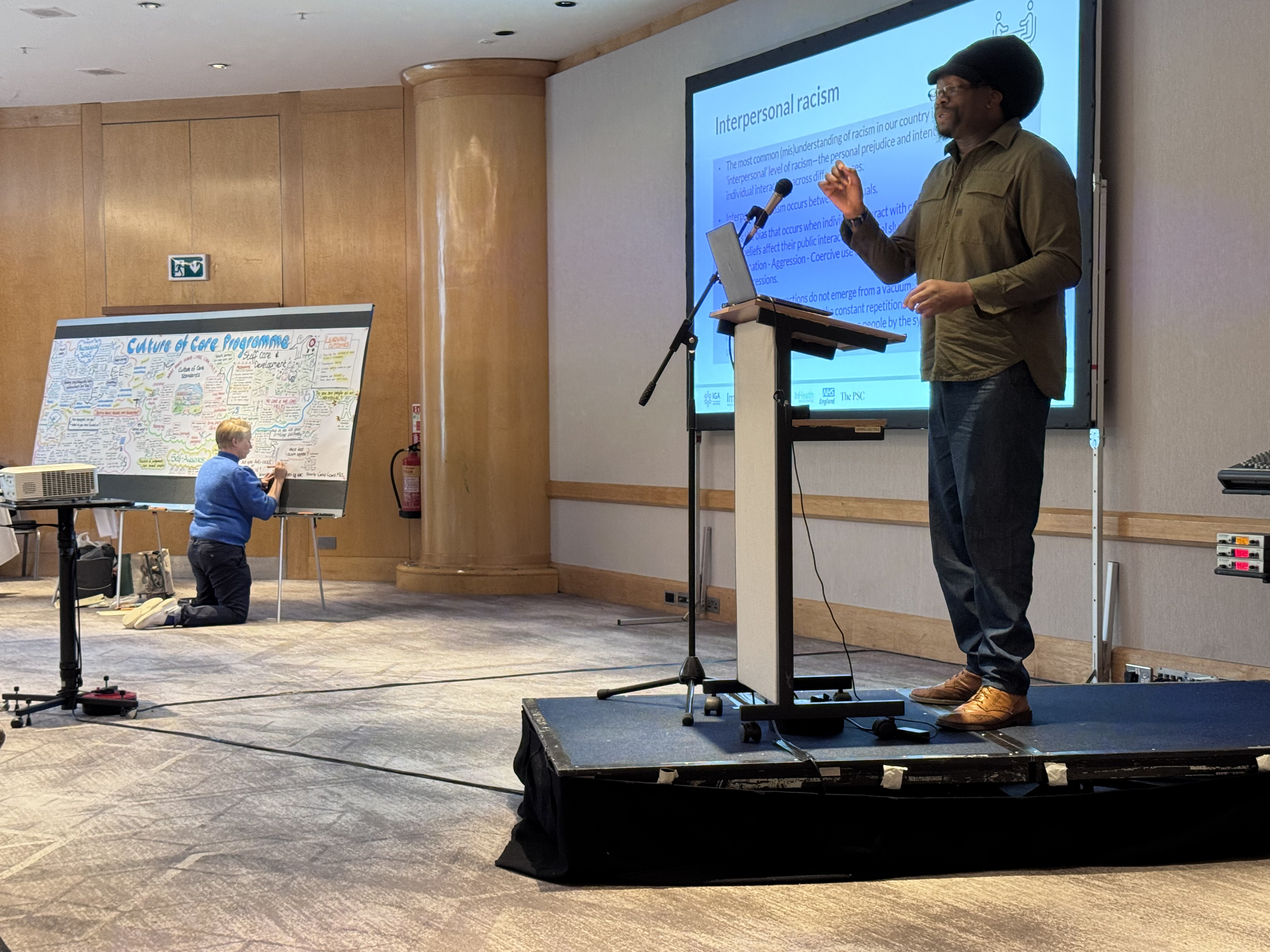
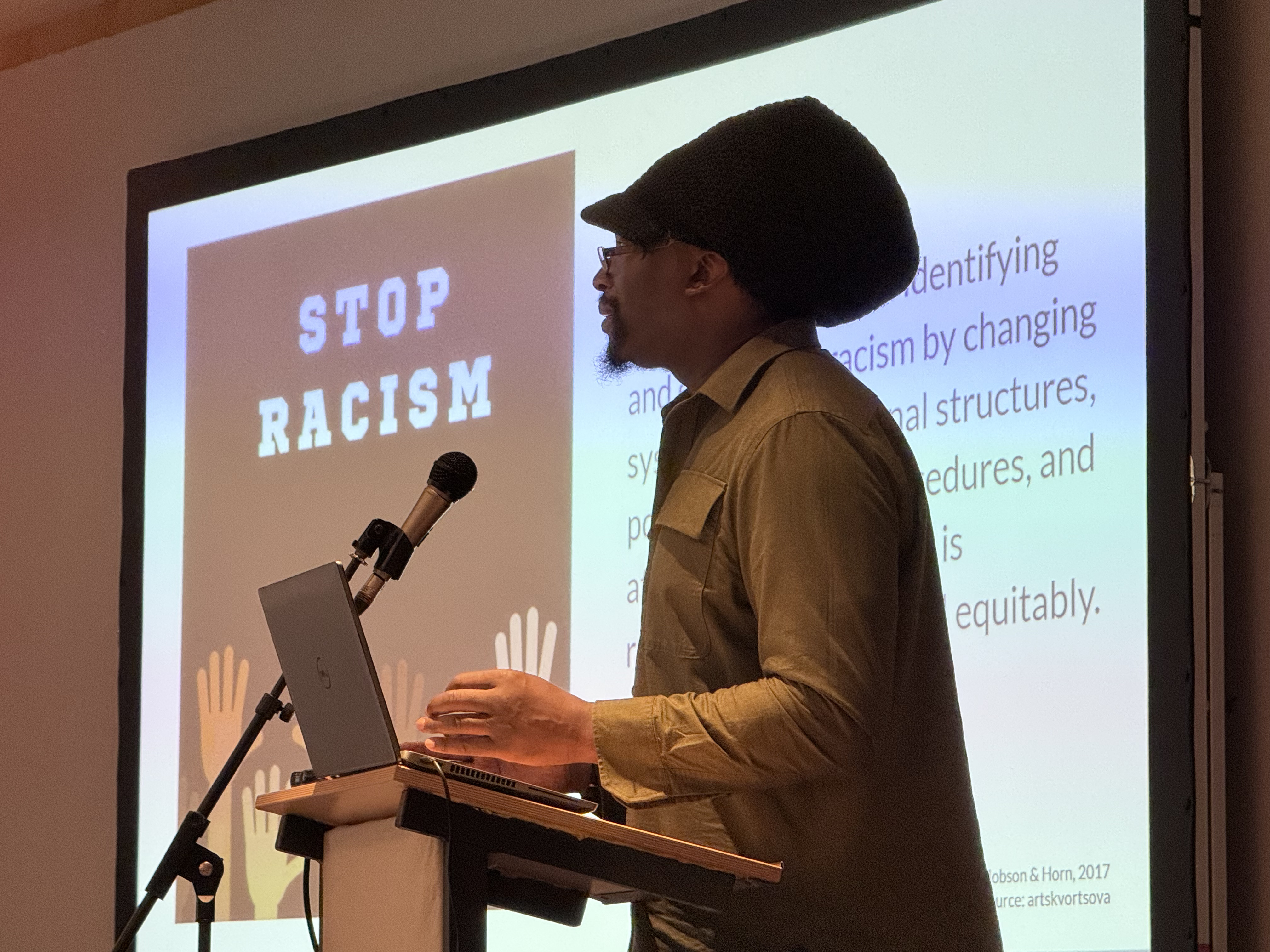
Jide Ashimi is a Transformation Advisor, organisational culture practitioner and the founder of About Transformation. For more than twenty years he has worked inside NHS mental health services and across public services, observing how organisations reproduce both possibility and harm.
A defining moment came during his MSc in Occupational Psychology, when he chose to withdraw because of its impact on his physical and psychological wellbeing and his growing awareness of the Eurocentric assumptions within the field. The experience affected his connection with his Black and African identity, and for a time he carried it as evidence about his own capability.
It became a deeper inquiry instead: into whose knowledge is legitimised, how systems shape self-concept, and why apparently progressive organisations can reproduce inequity while sincerely believing themselves to be fair. That inquiry led him towards Black Psychology, African-centred thought and lived experience knowledge, placed in dialogue with organisational and psychological theory. It did not require rejecting what he had learned. It required a more honest integration.
His foundations include Psychology, Occupational Psychology, Black Psychology, African-Centred Therapy, coaching, Motivational Interviewing, systems thinking, Critical Race Theory, reflective practice and restorative approaches. The authority of the work does not rest on qualification alone.
He does not position himself as the sole holder of expertise. He brings knowledge, experience and a developed capacity to hold complex processes, alongside curiosity, humility and an understanding that transformation is created through relationship.
Start a Conversation
What Is Your Organisation Becoming?
Every organisation is already creating its future through the conditions it cultivates today. The work begins by learning to see those conditions more clearly.
A first conversation is an inquiry, not a predetermined package. It is time spent understanding your context, what you are trying to change, and what may be shaping the gap between aspiration and experience.